

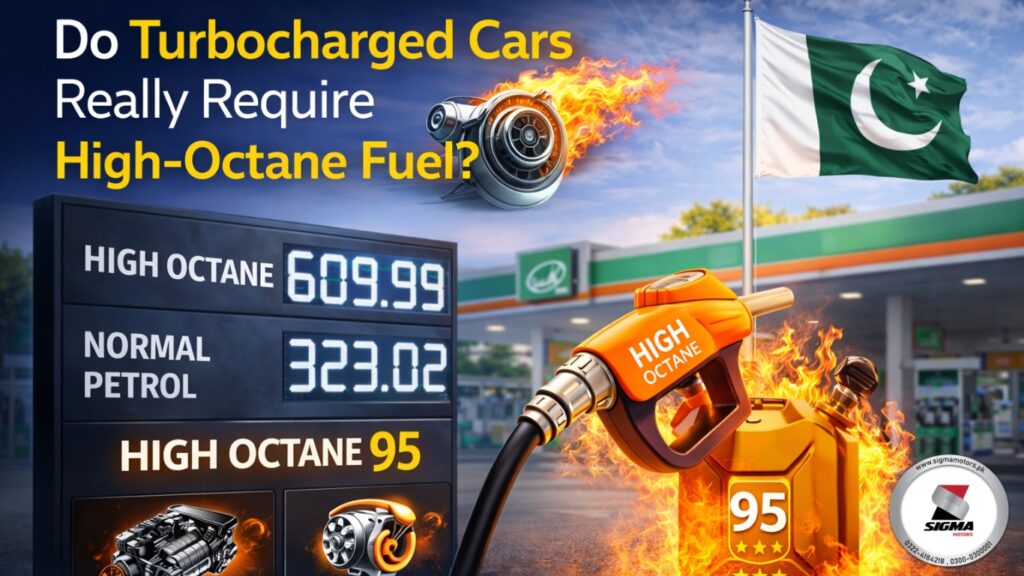
Many drivers believe that if a car has a turbocharger, it must run on high-octane (premium) fuel. But is that always true? The answer is more nuanced, some turbo engines need it, while others can run on regular fuel depending on how they are engineered.
What Does High-Octane Fuel Actually Do?
Octane rating measures how well fuel can resist premature ignition (engine knocking) under pressure.
Higher-octane fuel:
- Burns more smoothly under high pressure
- Prevents knocking or pre-ignition
- Protects engine components
This becomes especially important in high-performance or high-pressure engines.
Why Turbo Engines Often Prefer Premium Fuel?
Turbocharged engines compress more air into the combustion chamber, increasing pressure and temperature.
Because of this:
- The risk of engine knock increases
- High-octane fuel provides better stability under pressure
- Engines can deliver more power and efficiency
In simple terms, premium fuel helps turbo engines perform at their best and stay safe under stress.
Do All Turbo Cars Require High-Octane Fuel?
No, not all turbocharged cars strictly require it.
There are two main scenarios:
1. Turbo Cars That Require Premium Fuel
Some performance-oriented engines are specifically tuned for high-octane fuel. Using regular fuel in these can lead to:
- Reduced power
- Poor fuel efficiency
- Possible long-term engine stress
2. Turbo Cars That Can Run on Regular Fuel
Modern engines often include knock sensors and smart ECUs that adjust timing automatically.
This means:
- The engine won’t be damaged immediately
- But performance and efficiency may drop
What Happens If You Use Low-Octane Fuel?
If you use regular petrol in a turbo engine designed for premium:
- The engine may reduce power output
- Fuel consumption can increase
- Knocking risk rises under heavy acceleration
- Long-term wear may increase if used consistently
Modern systems protect the engine, but they do so by sacrificing performance.
Does Premium Fuel Make Every Turbo Car Faster?
Not always.
If your car is designed for premium fuel → You’ll get better performance
If your car is tuned for regular fuel → You may see little to no difference
Using high-octane fuel in a car that doesn’t need it usually doesn’t add extra power—it just increases cost.
How to Know What Your Car Needs?
The best way to decide is simple:
- Check the owner’s manual
- Look at the fuel cap label
- Follow the manufacturer’s recommendation
This ensures the best balance of performance, efficiency, and engine health.
Final Thoughts
Turbocharged engines often benefit from high-octane fuel because of the higher pressure and performance demands. However, not every turbo car strictly requires it.
The key takeaway is:
Use the fuel your car is designed for—not what sounds “better.”
Premium fuel can unlock performance in the right engine, but in others, it may just increase your fuel bill without real benefits.
Sigma Motors Japan keeps you informed with expert automotive insights to help you make smarter decisions about your vehicle.