Pakistan’s continuous increase in fuel prices is expected to significantly raise the cost of operating government vehicles. With thousands of official cars being used by federal and provincial departments, the rising petrol and diesel prices could place additional pressure on the country’s already strained public finances.
Recent estimates suggest that the government’s annual spending on fuel for official transport may rise sharply in the coming months.
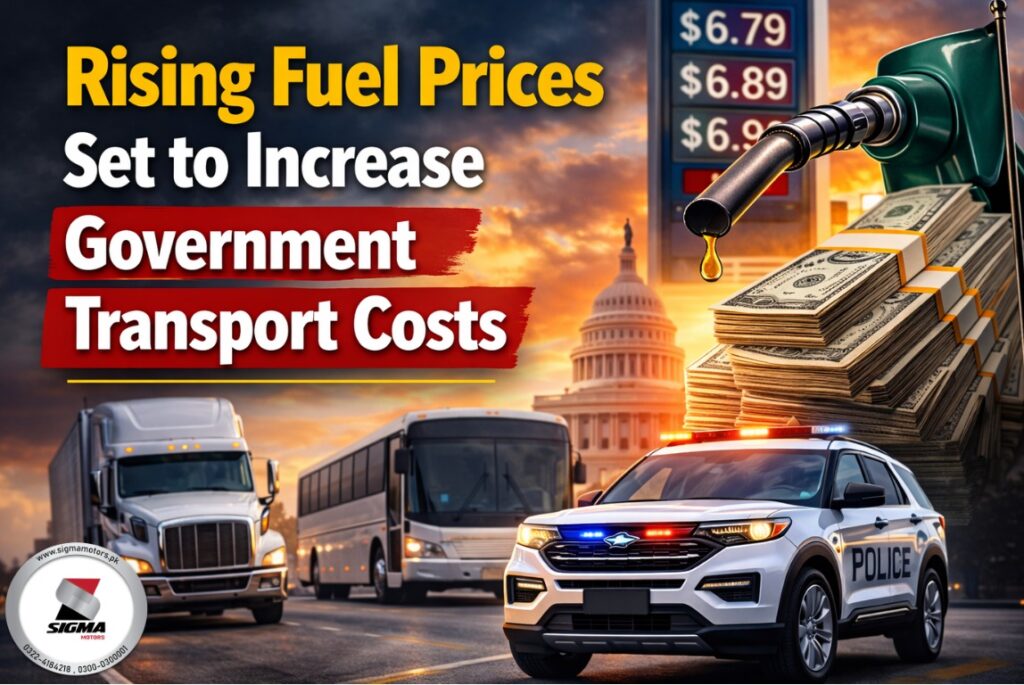
Government Fuel Bill Could Increase By 25%
According to recent reports, the annual fuel expense for government vehicles currently ranges between Rs60 billion and Rs70 billion. With petroleum prices climbing rapidly, officials expect this bill to increase by around 25%, adding billions of rupees to the government’s transport budget.
This increase comes despite earlier instructions issued to government departments to reduce fuel usage by 40% as part of cost-saving measures.
However, the strategy has not produced the expected results due to the sharp rise in petrol prices and continued heavy use of official vehicles.
Thousands Of Government Vehicles Drive Up Costs
One of the biggest reasons behind the growing fuel expenditure is the large number of vehicles used by government departments across Pakistan.
For example:
- Punjab operates nearly 30,000 government vehicles, costing roughly Rs20 billion annually in fuel.
- Federal departments run approximately 12,000–15,000 vehicles, with fuel expenses of around Rs9 billion per year.
- Sindh maintains about 20,000 official vehicles, while Khyber Pakhtunkhwa and Balochistan together operate more than 20,000 vehicles.
With such large fleets, even a small increase in petrol or diesel prices can significantly impact the national budget.
Luxury SUVs Also Contribute To Higher Spending
Another factor behind rising government fuel expenses is the continued use of large SUVs and high-engine-capacity vehicles by senior officials.
These vehicles typically consume much more fuel compared with smaller cars, making them costly to operate when fuel prices surge. As petrol prices rise across the country, the operational cost of these vehicles increases proportionally.
Experts believe that switching to smaller, fuel-efficient vehicles could help reduce the government’s fuel spending.
Experts Suggest Monetization Policy
Economists and policy experts are recommending a “monetization” policy as a possible solution to control rising transport costs.
Under this system, government officials would receive a fixed monthly allowance for travel instead of unlimited fuel for official vehicles. This approach could encourage more responsible fuel usage and reduce unnecessary government transport expenses.
However, the policy has not yet been fully implemented.
Rising Fuel Prices Could Impact The Economy
Increasing petroleum prices not only affect government spending but can also influence the broader economy. Higher transport costs may lead to increased prices for goods and services, putting further pressure on inflation and household budgets.
As fuel prices remain volatile due to global energy market fluctuations, managing transport costs will remain a key challenge for policymakers.
Sigma Motors Japan keeps customers informed about the latest automotive, fuel market, and transportation developments that impact vehicle owners in Pakistan.
For inquiries about importing fuel-efficient Japanese cars from Japan, feel free to contact our team.