

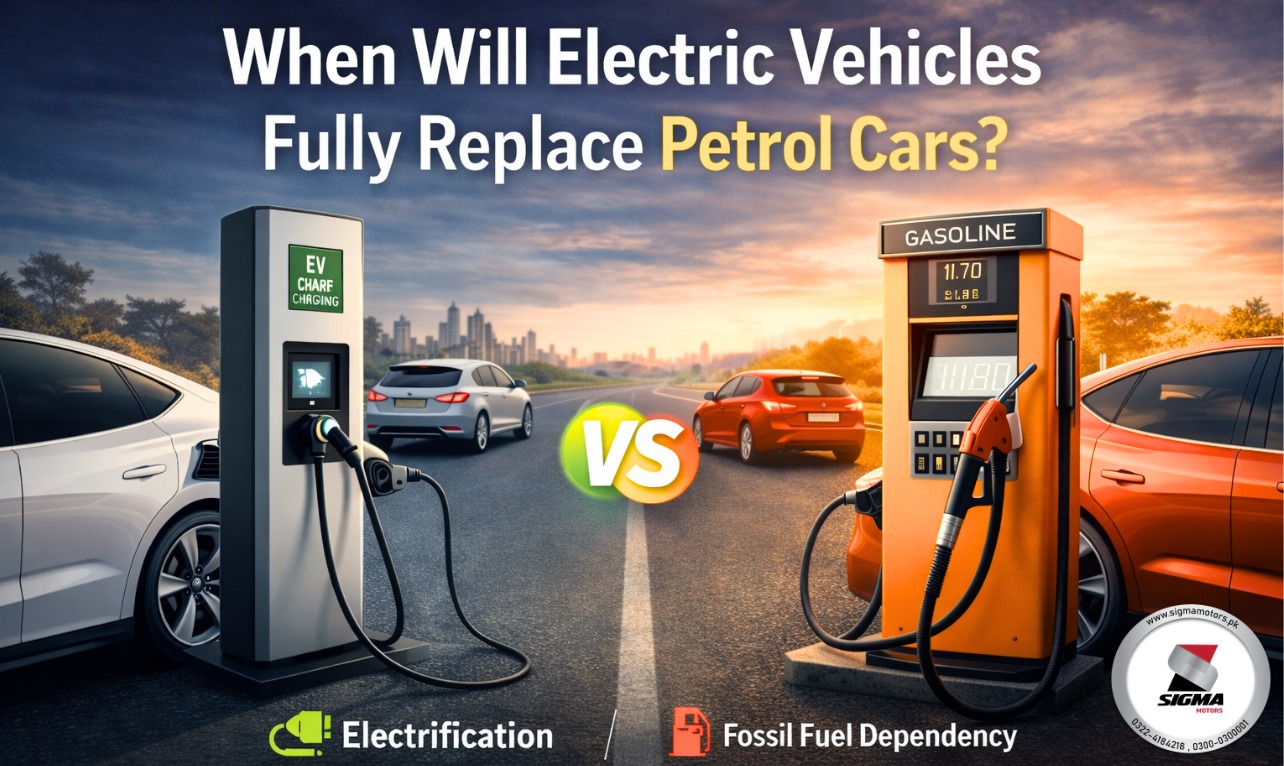
The debate about electric vehicles replacing traditional petrol and diesel cars has shifted from “if it will happen” to “when it will happen.” Governments, automakers, and technology companies worldwide are pushing toward electrification, but the transition is expected to take decades rather than happening overnight.
For countries like Pakistan, the shift will be even slower due to infrastructure challenges, economic factors, and the long lifespan of existing vehicles.
The Transition Has Already Begun
Electric vehicles (EVs) are rapidly gaining popularity around the world. Many governments have already set deadlines to phase out petrol and diesel cars. For example, several regions in Europe have discussed banning the sale of new internal combustion engine vehicles by around 2035, encouraging manufacturers and consumers to move toward electric mobility.
Automakers are also heavily investing in EV technology, introducing new electric models every year. This global momentum indicates that electrification is becoming the future of the automotive industry.
Why Petrol Cars Won’t Disappear Overnight
Even if electric vehicles dominate new car sales in the coming years, petrol-powered cars will still remain on the roads for a long time.
Currently, there are more than 1.3 billion fuel-powered vehicles worldwide, and the average vehicle lifespan is around 15–20 years. This means that even if all new vehicles sold in the future were electric, millions of existing petrol cars would continue operating for years.
Because of this long lifecycle, the complete replacement of fuel vehicles will happen gradually rather than at a single point in time.
EV Adoption Happens in Phases
Experts often describe EV adoption as an S-curve process:
- Early Stage – Slow Growth
New technology enters the market, but adoption remains limited due to high costs and limited infrastructure. - Rapid Expansion Phase
As battery costs decrease and charging networks expand, EV sales grow rapidly. - Final Phase – Hardest Transition
The last portion of the market – often rural areas and low-income buyers—takes the longest to switch to electric vehicles.
Many developed countries are entering the acceleration phase, while developing countries are still in the early stage.
Infrastructure Is the Biggest Challenge
While EV technology has improved significantly, infrastructure development has not kept pace in many regions.
Key challenges include:
- Limited public charging stations
- Weak electricity grids in some areas
- Lack of charging facilities in apartments and residential buildings
- Insufficient intercity charging networks
Without these improvements, electric vehicles will remain concentrated mainly in major cities rather than being widely adopted nationwide.
The Situation in Pakistan
Pakistan is gradually moving toward electric mobility through policies such as the National Electric Vehicle (NEV) Policy 2025–2030. The government aims to increase EV adoption and reduce dependence on imported fuel.
Some major developments include:
- Incentives for EV manufacturing and purchases
- Plans to install fast-charging stations on highways
- Electrification of public transport fleets
- Local EV assembly projects by global automakers
However, experts say Pakistan’s EV ecosystem is still in its early stage and will require significant investment and infrastructure improvements before EVs become mainstream.
So When Will Electric Cars Fully Replace Petrol Cars?
There is no single year when petrol vehicles will completely disappear.
Most analysts expect the transition to unfold in stages:
- 2030s: EVs may dominate new car sales in many countries
- 2040s: Large portion of global vehicle fleets become electric
- 2050 and beyond: Petrol vehicles may become rare but not entirely gone
In developing markets like Pakistan, fuel-powered vehicles are likely to remain common for a longer period due to affordability and infrastructure limitations.
Final Thoughts
Electric vehicles are clearly the future of transportation, but replacing petrol cars worldwide will take decades. The pace of this transition will depend on battery technology, charging infrastructure, energy reliability, and vehicle affordability.
Instead of focusing on a specific year when petrol cars disappear, the real milestone will be when electric vehicles become cheaper, easier to charge, and more practical for everyday drivers.
For markets like Pakistan, that tipping point is approaching—but the journey toward a fully electric future is just beginning.
Sigma Motors Japan keeps automotive enthusiasts informed about global mobility trends, electric vehicles, and the future of transportation.