

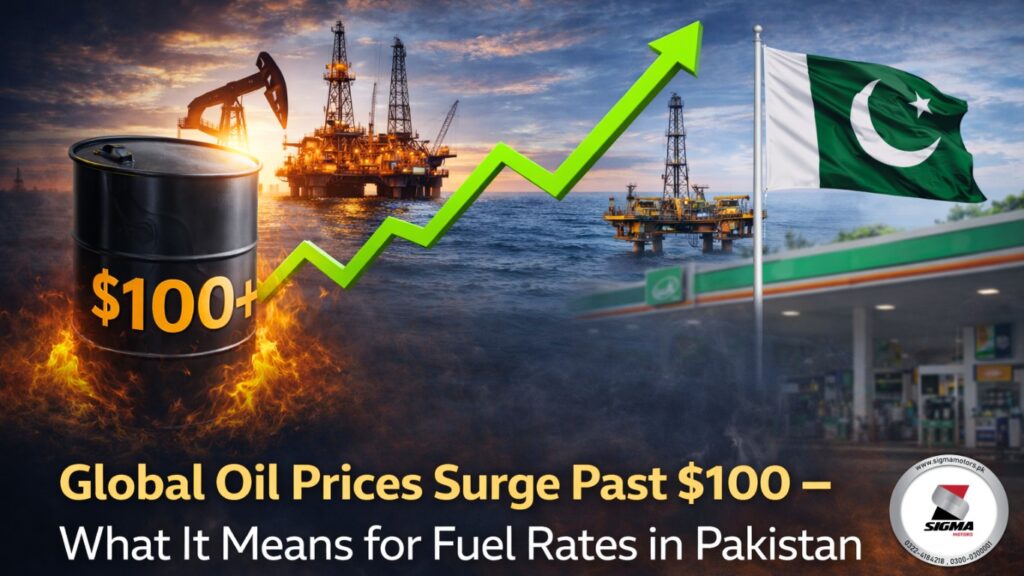
International crude oil prices have once again crossed the $100 per barrel mark, raising concerns about a potential increase in petrol and diesel prices in Pakistan. As the country heavily depends on imported fuel, any major shift in global oil markets directly impacts local fuel costs.
Why Are Oil Prices Rising Again?
The recent surge in crude oil prices is mainly driven by:
- Geopolitical tensions in key oil-producing regions
- Disruptions in major shipping routes
- Reduced global oil supply
- Increased demand in international markets
These factors have pushed crude prices above $100, creating uncertainty for oil-importing countries like Pakistan.
How Global Oil Prices Affect Pakistan
Pakistan relies on imported crude oil and refined petroleum products to meet most of its energy needs. When global oil prices increase:
- Import costs rise significantly
- Pressure builds on foreign exchange reserves
- The government may adjust fuel prices to recover costs
Because of this dependency, international price changes are quickly reflected in domestic fuel rates.
Possible Increase in Petrol and Diesel Prices
With crude oil crossing $100, experts predict that petrol and diesel prices in Pakistan may increase in the coming pricing cycle.
- Potential impacts include:
- Higher petrol prices for consumers
- Increased transportation costs
- Rising prices of goods and services
- Additional burden on inflation
The final price adjustment will depend on exchange rates, government taxes, and subsidy decisions.
Impact on Daily Life and Economy
Fuel price increases have a ripple effect across the economy. Higher fuel costs can lead to:
- Increased fares for public transport
- Higher logistics and delivery expenses
- Rising cost of essential goods
- Pressure on businesses and industries
This can ultimately affect the overall cost of living in the country.
Government’s Role in Price Adjustment
Fuel prices in Pakistan are regulated and reviewed periodically by the Oil and Gas Regulatory Authority, with final approval from the government.
Authorities may choose to:
- Pass on the full increase to consumers
- Adjust taxes to control price hikes
- Provide temporary relief through subsidies
The decision will depend on economic conditions and fiscal policies.
What Should Consumers Expect?
Motorists should be prepared for possible changes in fuel prices in the near future. Keeping track of official announcements will help avoid surprises during the next pricing revision.
At the same time, rising fuel costs are encouraging many consumers to consider fuel-efficient and hybrid vehicles as long-term solutions.
Final Thoughts
The rise of crude oil above $100 once again highlights how sensitive Pakistan’s fuel prices are to global market fluctuations. While the exact impact will depend on government decisions, higher fuel costs seem likely in the short term.
For consumers, adopting fuel-efficient driving habits or considering alternative vehicle options may help manage rising expenses.
Sigma Motors Japan keeps you informed about global oil trends and automotive developments that affect drivers in Pakistan.