

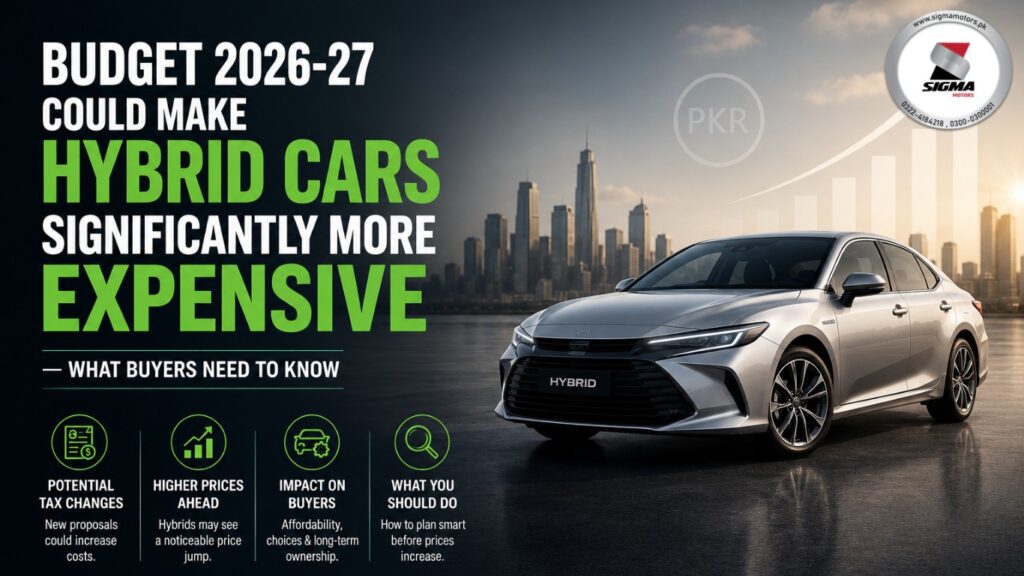
Pakistan’s upcoming Budget 2026-27 may bring a major change for hybrid vehicle buyers. According to reports and ongoing discussions surrounding tax reforms, hybrid vehicle prices could increase substantially from July 2026 if existing tax concessions are reduced or removed. Some popular hybrid models could see price increases ranging from a few hundred thousand rupees to as much as Rs. 17 lakh, depending on the vehicle category and pricing segment.
For consumers considering a hybrid vehicle purchase, the next few weeks may become one of the most important periods in Pakistan’s automotive market.
Why Are Hybrid Vehicle Prices Expected to Rise?
The main concern revolves around proposed changes to the General Sales Tax (GST) structure for hybrid and plug-in hybrid vehicles.
Currently, hybrid vehicles benefit from reduced tax treatment, making them more affordable compared to conventional vehicles. However, discussions linked to revenue targets and fiscal reforms could result in hybrids being moved closer to the standard GST regime. If implemented, vehicle prices would rise accordingly.
Industry experts believe the final budget announcement will determine whether hybrid buyers continue receiving tax incentives or face significantly higher purchase costs.
Potential Impact on Vehicle Prices
If the proposed tax changes are approved:
- Entry-level hybrids could become several hundred thousand rupees more expensive.
- Mid-size hybrid SUVs may see price increases running into several lakhs.
- Premium hybrid vehicles could experience increases approaching Rs. 17 lakh.
For many buyers, this would substantially affect affordability and overall ownership costs.
What This Means for Japanese Hybrid Cars
Japanese manufacturers have become global leaders in hybrid technology, offering vehicles known for:
- Outstanding fuel efficiency
- Long-term reliability
- Advanced hybrid systems
- Lower maintenance requirements
- Strong resale value
Even if taxation changes increase purchase prices, Japanese hybrid vehicles may continue attracting buyers because of their proven ability to reduce fuel expenses and provide dependable long-term ownership.
Popular Japanese hybrid categories remain highly desirable among Pakistani buyers due to their combination of economy, comfort, and technology.
Rising Fuel Costs Continue Supporting Hybrid Demand
Despite possible price increases, the demand for hybrid vehicles is expected to remain strong because fuel efficiency has become a major priority.
Many consumers are actively seeking vehicles that offer:
- Better fuel economy
- Reduced running costs
- Lower environmental impact
- Advanced driving technology
Hybrid vehicles continue to meet these requirements better than many conventional alternatives.
Could Japanese Imports Become Even More Attractive?
Interestingly, while locally assembled hybrids may face taxation adjustments, discussions regarding broader automotive reforms and potential import policy changes continue to generate interest among buyers. Some industry observers believe future policy adjustments could create new opportunities within the imported vehicle segment.
For buyers considering premium Japanese vehicles, staying informed about budget developments will be extremely important.
Sigma Motors Insight
At Sigma Motors Japan, we believe Japanese hybrid vehicles remain among the smartest automotive investments available today.
They continue to offer:
- Exceptional fuel efficiency
- Proven reliability
- Advanced hybrid technology
- Excellent resale value
- Premium driving comfort
While taxation policies may change, the long-term value proposition of Japanese hybrid vehicles remains strong for buyers focused on quality, efficiency, and durability.
What Should Buyers Do Before the Budget?
If you are planning to purchase a hybrid vehicle, consider:
- Monitoring budget announcements closely
- Reviewing current vehicle pricing
- Evaluating import options where applicable
- Understanding possible tax implications before booking
Making an informed decision before major policy changes can potentially save significant costs.
Final Verdict
The upcoming Budget 2026-27 could become a turning point for Pakistan’s hybrid vehicle market. Proposed GST adjustments may increase hybrid vehicle prices by amounts ranging from a few lakhs to as much as Rs. 17 lakh, depending on the model.
However, despite potential price increases, Japanese hybrid vehicles continue to stand out because of their unmatched reliability, fuel economy, advanced technology, and strong resale value.
For buyers focused on long-term ownership and lower running costs, Japanese hybrids remain one of the most practical and worthwhile choices in Pakistan’s automotive market.