

EV Charging in Pakistan: How to Protect Your Electric Car from Extreme Heat and Monsoon Weather
By Sigma Motors | Japanese Car Import & Export Specialists
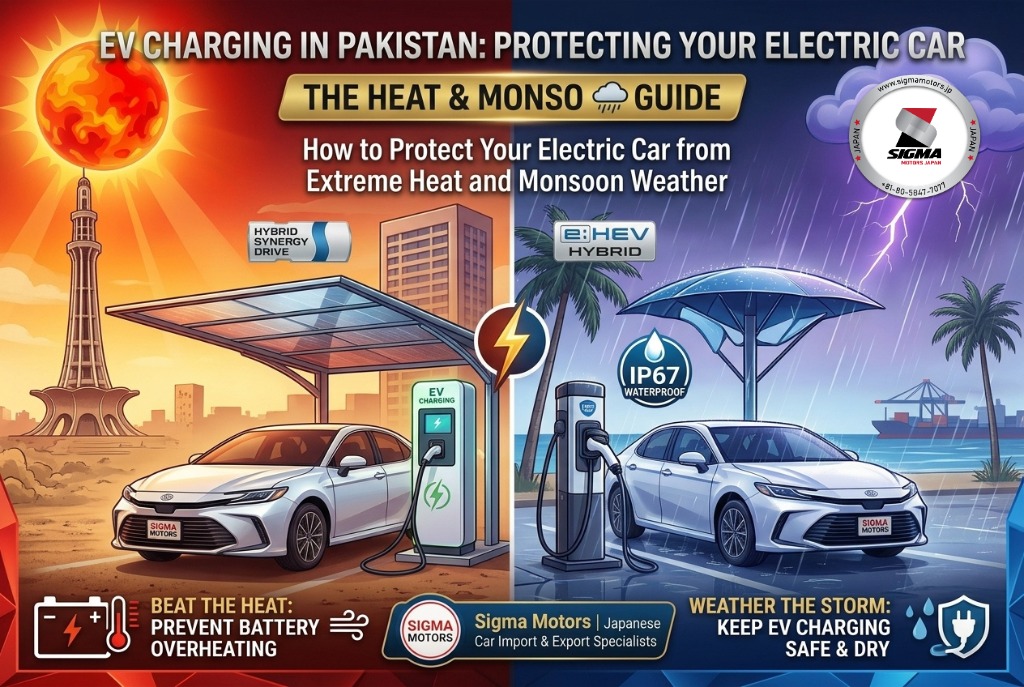
Pakistan’s transition towards electric mobility is creating new opportunities for drivers seeking modern, energy-efficient vehicles. From fully electric cars to plug-in hybrids, advanced automotive technology is becoming an increasingly important part of the local market.
However, Pakistan’s climate presents unique challenges for electric vehicle (EV) charging. Extreme summer temperatures, heavy monsoon rainfall, urban flooding, dust and unstable electrical installations all make charging safety an essential consideration.
For EV owners, understanding how to charge, maintain and store an electric vehicle safely is just as important as understanding its driving range and battery performance.
Why EV Charging Safety Matters in Pakistan
Electric vehicles use sophisticated battery systems, electronic controls and charging equipment. These systems are designed with safety protections, but their effectiveness depends on correct installation, proper maintenance and compliance with the vehicle manufacturer’s instructions.
Pakistan’s hot summers can increase thermal stress on batteries and charging equipment. During the monsoon season, rainwater, standing water, damaged electrical connections and flooding can create additional hazards.
A safe charging routine therefore requires more than simply connecting a charging cable. Owners must consider the electrical supply, installation quality, weather exposure and condition of the vehicle’s battery.
High Temperatures and EV Battery Protection
Extreme heat can affect battery performance, charging speed and long-term battery health. Modern electric vehicles use battery management and, in many models, thermal management systems to help keep battery temperatures within an appropriate operating range.
Nevertheless, these systems do not eliminate every risk, particularly when a battery or charging component is damaged or malfunctioning.
Best Practices for Charging During Summer
Whenever possible, park and charge your EV in a shaded, well-ventilated location that meets the manufacturer’s requirements. Avoid exposing portable charging equipment to direct sunlight for prolonged periods when a suitable alternative is available.
Follow the vehicle’s recommended charging limits and use the correct charger. If the car displays a battery-temperature warning, charging-system fault or other safety alert, follow the manufacturer’s instructions rather than ignoring the warning.
Do not attempt to cool a battery by pouring water over it, applying ice or placing it in an improvised cooling enclosure. If a battery becomes unusually hot, swollen, damaged or emits an unusual smell, stop using it and seek qualified assistance.
Does Hot Weather Reduce Driving Range?
High temperatures can influence energy consumption because the vehicle may use additional energy to cool the battery and passenger cabin. Actual range also depends on traffic, driving speed, air-conditioning use, battery condition and driving habits.
For drivers travelling across Pakistan, it is sensible to plan journeys with charging stops and a reasonable range reserve, particularly during extreme weather.
Monsoon Rain, Floodwater and Electric Car Safety
Electric vehicles are engineered with electrical isolation and weather protection appropriate to their design. However, this does not mean every EV or charging connection is safe in every wet-weather situation.
Rain-compatible charging equipment must be used according to its manufacturer’s instructions. Floodwater, submerged connectors, damaged cables and water-affected electrical installations are different hazards.
Essential Precautions During Heavy Rain
Before connecting your vehicle, visually inspect the charging cable, connector and charging equipment for damage, contamination or signs of water ingress. Never handle charging connections with wet hands or use visibly damaged equipment.
Use only charging stations and home chargers intended for the installation environment. Outdoor equipment must have suitable weather protection and be installed with appropriate electrical safeguards.
Avoid charging in standing water or in areas where flooding is possible. If floodwater reaches the charging equipment, electrical supply or vehicle, do not assume the system is safe after the water recedes. Arrange professional inspection before using the affected equipment or charging the vehicle.
If flooding may have affected the high-voltage battery, follow the vehicle manufacturer’s emergency guidance and contact qualified recovery or service personnel. Do not attempt to restart, recharge or drive a potentially damaged vehicle.
Installing a Home EV Charger the Right Way
A reliable charging installation starts with the building’s electrical system, not simply the charger itself. Electric vehicle charging can create a sustained electrical load, so an existing household socket or extension cable should not automatically be considered suitable.
Before installation, have a qualified electrician assess the available supply, wiring capacity, earthing and required protective devices.
What Should a Safe Charging Setup Include?
A professionally designed installation should include appropriately rated wiring, protection against overloads and short circuits, suitable residual-current and DC-leakage protection where required, and safe isolation arrangements.
The charger should be compatible with the vehicle and installed according to its manufacturer’s instructions and applicable Pakistani requirements. Cable routing should minimise trip hazards and protect the cable from crushing or vehicle impact.
Outdoor installations also need suitable protection against rain, dust, heat and other site-specific environmental conditions. Drainage and flood exposure should be considered before selecting the charger’s location.
Avoid extension cords, improvised adapters and unverified wiring arrangements. Repeated breaker trips, unusual heating, discolouration or a burning smell are reasons to stop using the equipment and arrange a professional inspection.
Safe Charging for Electric Cars and Hybrid Vehicles
Not every electrified vehicle uses the same charging method. Understanding the difference helps owners choose the correct equipment and follow the appropriate safety procedure.
Fully electric vehicles (BEVs) operate using electric energy stored in a traction battery and require external charging.
Plug-in hybrid electric vehicles (PHEVs) combine an electric charging system with a petrol engine. They can be externally charged and may offer electric-only driving for suitable journeys.
Self-charging hybrids (HEVs) use a petrol engine and electric motor, with the battery generally recharged through the vehicle’s own system and regenerative braking. They normally do not require an external charging connection.
For Japanese-import vehicles, confirm the exact model, grade, charging connector, supported charging standards and battery specifications before purchasing a charger. Equipment that physically fits a connector is not necessarily compatible with the vehicle.
Warning Signs of a Battery or Charging Fault
Owners should take the following signs seriously: unusual battery heating, swelling, leaking, visible damage, unusual odours, hissing or crackling sounds, smoke, or repeated charging-system warnings.
If a vehicle or battery shows signs of a potentially serious fault, stop charging if it is safe to do so and move away. Do not touch, open, carry or attempt to repair a suspect high-voltage battery.
What to Do if an EV Battery Smokes or Catches Fire
Evacuate the immediate area and keep other people away. Call Rescue 1122 or the relevant local emergency service, explain that an electric vehicle or lithium-ion battery is involved, and provide the exact location.
Avoid smoke and vapour, do not attempt to move a burning vehicle, and do not approach the battery to unplug the charging cable. Only isolate the electricity supply if this can be done safely without delaying evacuation.
Battery fires can involve toxic gases and may reignite after visible flames disappear. Leave firefighting, recovery and decisions about re-entry to trained responders.
A household fire extinguisher should not be treated as a complete solution for a battery fire. Owners should prioritise evacuation and emergency assistance rather than attempting to fight a battery fire themselves.
Parking and Battery Storage During the Monsoon
Safe EV ownership continues even when the vehicle is not charging. Choose parking locations with suitable drainage and avoid areas that regularly accumulate floodwater.
Follow the manufacturer’s guidance for battery charge level and storage when leaving a vehicle unused for an extended period. Do not leave a damaged or suspect battery connected to a charger.
Charging stations, workshops, dealerships and battery-storage facilities should have suitable inspection procedures and arrangements for separating damaged batteries from serviceable equipment.
Property managers should also ensure that charging cables and parked vehicles do not obstruct corridors, staircases, emergency exits or access for firefighters.
Pakistan’s EV Charging Infrastructure and Safety Standards
The growth of electric mobility requires reliable charging infrastructure alongside the increasing availability of EVs. Pakistan has a regulatory framework for electric vehicle charging infrastructure and battery-swapping facilities, including the National Energy Efficiency and Conservation Authority’s published guidance.
The National Electric Vehicle Policy also identifies charging infrastructure development as an important part of expanding EV adoption.
For consumers, the practical priorities are straightforward: choose appropriately certified equipment, use qualified installers, follow manufacturer instructions and ensure that charging facilities receive suitable inspection and maintenance.
For businesses, residential buildings and public charging operators, electrical protection, weather suitability, fire-safety planning and clear emergency procedures are essential considerations.
Sigma Motors: Choose Your Japanese EV with Confidence
At Sigma Motors, we recognise that selecting an imported vehicle involves more than comparing its price, model year and specifications. Buyers should also understand its powertrain, battery technology, charging compatibility and maintenance requirements.
When considering a Japanese electric or hybrid vehicle, verify whether it is a fully electric vehicle, a plug-in hybrid or a conventional hybrid. Check the exact grade, chassis code, battery specifications and charging compatibility before making a purchasing decision.
Vehicle condition and available documentation are particularly important when assessing a used EV. Where applicable, buyers should request a professional inspection and battery-health assessment rather than relying on advertised range alone.
Sigma Motors supports vehicle sourcing and export arrangements from Japan to Pakistan, helping customers make informed decisions about Japanese vehicles.
Contact Sigma Motors
Japan WhatsApp: +81-80-5847-7077
Pakistan WhatsApp: +92-300-0300001
Website: https://www.sigmamotors.jp/
Pakistan website: https://www.sigmamotors.pk/
Final Thoughts: Safe Charging Starts with Good Habits
Pakistan’s heat and monsoon weather do not make electric mobility inherently unsafe, but they make proper charging practices and installation quality especially important.
Choose suitable equipment, maintain the electrical system, avoid flooded charging areas and respond promptly to battery warnings. Never charge a damaged battery or assume that equipment exposed to floodwater is safe simply because it has dried.
With informed vehicle selection, professional installation and responsible ownership, drivers can make better decisions as Pakistan’s electric mobility market continues to develop.
Disclaimer: This article provides general educational information, not a substitute for vehicle-specific instructions, professional electrical assessment or emergency-service guidance. Always follow the vehicle and charger manufacturer’s instructions and applicable local safety requirements.